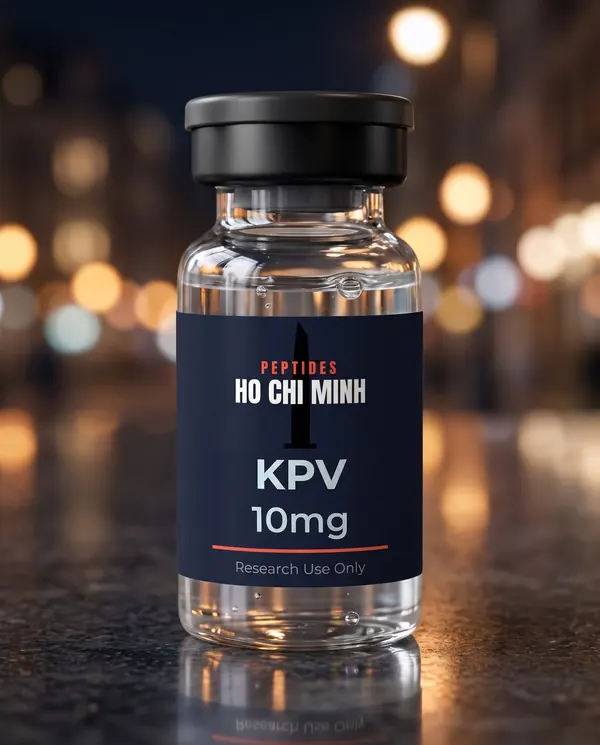
KPV peptide 10mg research vial
The KPV peptide is a 3 amino acid chain cut from the tail end of the hormone alpha-MSH; one 10mg vial costs 2,400,000 VND ($95 USD). KPV's three studies each come with a PubMed link, and the price above was confirmed on 11 October 2026.
What is KPV?
KPV is lysine, proline and valine in a row. Those three sit at the very end of alpha-MSH, a natural hormone.
In lab work, KPV enters gut cells through a carrier protein called PepT1.
KPV in cell and rodent work
- Animal and cell study, 2008. The team looked at how KPV gets into gut cells. They measured inflammation signals in human gut cells, and colon swelling in mice.
- Animal study, 2022. A study in rats with colon swelling was about a gel built to carry KPV, and it looked at the gut lining.
- Cell study, 2025. Human skin cells were exposed to fine dust pollution, with and without KPV. The team counted cell death and measured an inflammation signal called IL-1 beta.
Everything so far is cells and rodents, and our search found no published human trial. Many KPV papers are really about delivery systems, such as gels and tiny particles, with KPV as the test cargo.
How to read this
KPV studies come in two kinds. Some test KPV itself on gut or skin cells and on rodents with colon swelling. Many others test a delivery system, such as a gel or tiny particles, and use KPV as the cargo. In that second kind, the study is as much about the gel as about KPV. The PepT1 work matters for the same reason: it is about how KPV got into gut cells in the lab. No KPV study in people turned up in our search.
The KPV paper trail
The 2008 study ran in Gastroenterology and followed KPV into gut cells through a carrier protein, PepT1. The 2022 rat study, in Acta Biomaterialia, packed KPV into a sticky gel. The 2025 study, in Tissue and Cell, exposed human skin cells to fine dust pollution and measured cell death and IL-1 beta, an inflammation signal. With KPV as the cargo in a gel or tiny particles, the delivery system shapes what each study shows.
Sources: PubMed record 18061177 (animal and cell study, 2008); PubMed record 35245681 (animal study, 2022); PubMed record 40073467 (cell study, 2025).
How much does KPV cost per pack?
| Pack | Price | Per vial | Per mg |
|---|---|---|---|
| 1 vial | 2,400,000 VND ($95 USD) | 2,400,000 VND ($95 USD) | 240,000 VND ($9.50 USD) |
| 3 vials | 5,832,000 VND ($230.85 USD) | 1,944,000 VND ($76.95 USD) | 194,400 VND ($7.70 USD) |
| 5 vials | 8,640,000 VND ($342 USD) | 1,728,000 VND ($68.40 USD) | 172,800 VND ($6.84 USD) |
| 10 vials | 14,400,000 VND ($570 USD) | 1,440,000 VND ($57 USD) | 144,000 VND ($5.70 USD) |
Questions about KPV
What has research on KPV looked at?
Gut and skin inflammation models, in cells, mice and rats. Our search found no published human trial.
Why do so many KPV papers mention gels?
Many KPV papers are really about delivery systems, such as gels or tiny particles. KPV is the test cargo there, so the results depend on the gel or particle used, not only on KPV.
What do the letters KPV stand for?
They are the one-letter codes for its three amino acids, in order: K for lysine, P for proline and V for valine. Together they are the last three amino acids of alpha-MSH.
How many papers study KPV?
57 PubMed records turned up on 18 October 2026 when we searched for KPV as a peptide. That is a small record, and much of it tests KPV inside gels or other carriers rather than on its own.
By Peptides Ho Chi Minh, 11 October 2026